Loading...
Serving Murrieta, CA and surrounding areas. (951) 574-0182
Serving Murrieta, CA and surrounding areas. (951) 574-0182
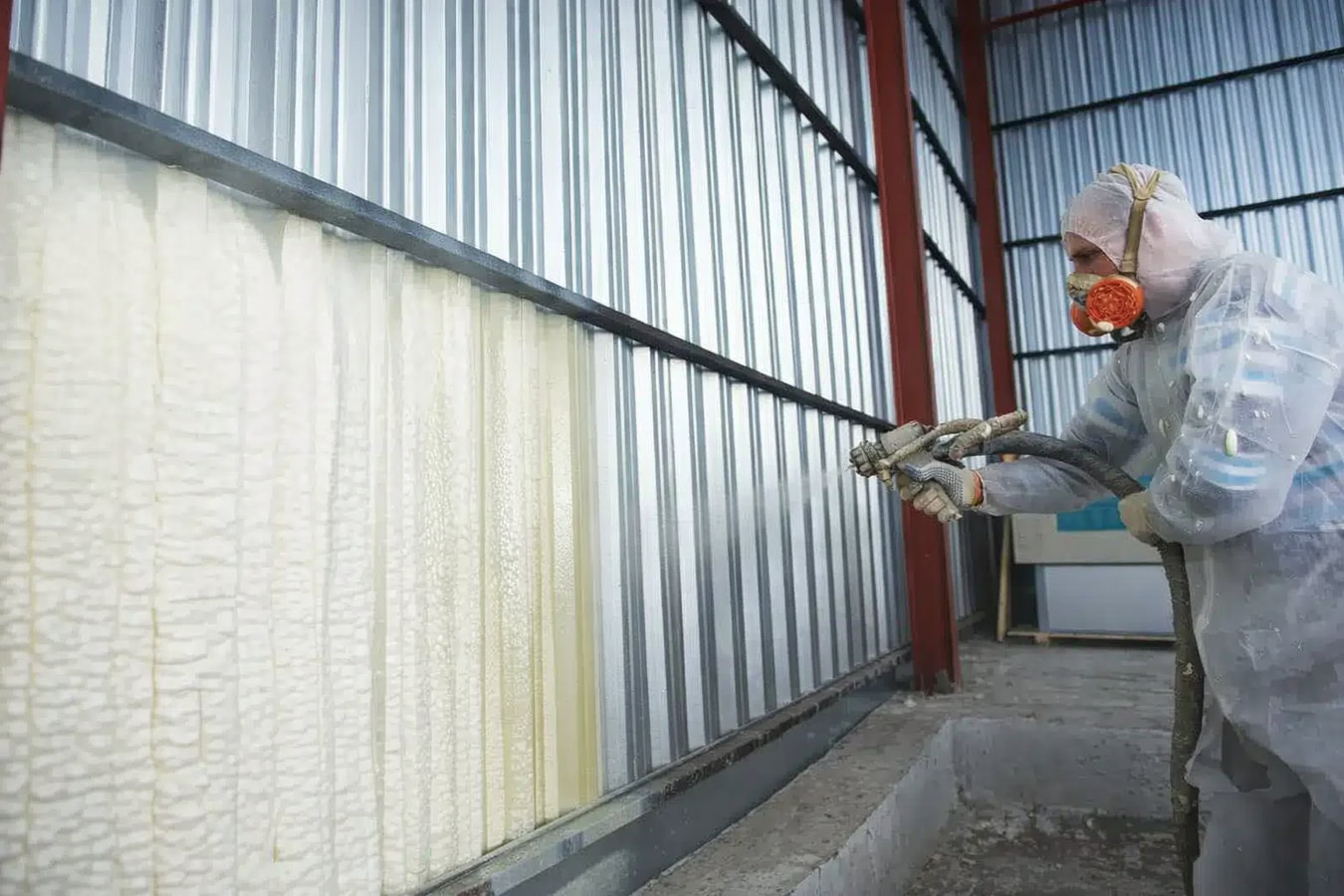
Murrieta Insulation is a local insulation contractor serving Riverside, CA with attic insulation, spray foam insulation, commercial insulation, and air sealing services. Riverside is one of the Inland Empire's oldest and largest cities, with a housing stock that spans over a century - and buildings from the Wood Streets bungalows to the newer Orangecrest subdivisions all benefit from proper insulation in a city that regularly sees 100-degree summers. We have served Southwest Riverside County since 2022, we reply within one business day, and every job begins with a free on-site estimate.
Riverside is the county seat of one of the largest counties in the United States by area, and its commercial building stock reflects that scale - office complexes, retail corridors, multi-tenant light industrial, and institutional buildings all need insulation that holds up under sustained 100-degree heat. Our commercial insulation service brings those buildings up to California Title 24 Climate Zone 10 standards, with permit coordination handled through the City of Riverside Building and Safety Division so business owners do not have to navigate that process themselves.
Riverside's housing stock spans more than a century, and the thermal standards for each era differ significantly. A postwar ranch home built in the 1950s off Chicago Avenue was insulated to the standards of that decade - well below the R-38 to R-60 range now recommended for this climate zone. Attic insulation upgrades are the most impactful single change most Riverside homeowners can make to reduce cooling bills in a city that averages around 287 sunny days per year.
Riverside's older Craftsman bungalows and Spanish Revival homes near downtown - many in the Wood Streets neighborhood and on the historic register - have original framing with gaps and penetrations that fiberglass batts alone cannot seal. Spray foam expands to fill those irregular cavities completely, providing both an insulation layer and an air seal in one pass. For historic homes where interior work needs to be minimally invasive, closed-cell spray foam applied from inside the attic or crawl space is often the cleanest solution available.
Santa Ana wind events arrive in Riverside every fall and winter, sometimes gusting above 50 mph, and they push hot, dry air through every gap in a home's building envelope. Sealing those openings - around recessed lights, plumbing penetrations, attic hatches, and HVAC runs - before new insulation goes in means the insulation can do its job at rated performance from day one. Homes near Mount Rubidoux and the western edge of the city tend to experience stronger wind exposure and benefit most from thorough air sealing.
A large portion of Riverside's residential walls were built without insulation or with minimal insulation, particularly in homes dating from the 1940s through the 1970s. Retrofit insulation adds material to existing wall cavities through small drilled holes, without tearing out drywall or disturbing interior finishes. For homeowners in established neighborhoods like La Sierra or Orangecrest where exterior stucco walls get intense afternoon sun exposure, this approach addresses one of the most persistent comfort problems in older Inland Empire homes.
Riverside is one of Southern California's oldest inland cities, and its housing stock reflects that history in ways that most newer Inland Empire cities do not. Homes near downtown were built in the early 1900s during the citrus boom, and they sit alongside postwar ranch homes from the 1950s and 1960s, which in turn sit alongside 1980s and 1990s subdivision homes in the outer neighborhoods like Orangecrest. Each era was built to the insulation standards of its time, and in every case those original standards fall well below what the city's climate demands today. Riverside summers regularly produce sustained heat above 100 degrees Fahrenheit, and that temperature range requires meaningfully better insulation than what most of the city's housing stock currently has.
The expansive clay soils that underlie large portions of the Inland Empire are a real factor in Riverside. Those soils expand when wet and shrink when dry, and that repeated movement over decades stresses foundation slabs, shifts floor framing, and gradually opens gaps in the building envelope around wall and crawl space insulation. Contractors who do not account for this ground behavior tend to install insulation that performs below expectations within a few years, as the structure continues to move around it.
The age diversity of Riverside's housing stock also creates a wide range of insulation scenarios. A 1915 Craftsman bungalow in the Wood Streets requires a different approach than a 1965 slab-foundation ranch home in central Riverside or a 1995 two-story stucco house in La Sierra. A contractor who has worked across that range of building types in this specific climate will make better decisions on material selection and installation method than one who defaults to the same approach for every job.
Our crew regularly pulls permits through the City of Riverside Building and Safety Division and coordinates inspections for commercial and permitted residential insulation projects. We are familiar with the city's permit timelines and what inspectors look for when reviewing insulation work in Climate Zone 10, which means commercial projects and permitted residential jobs move through the approval process without the delays that come from working with an unfamiliar municipality. Riverside's permit office can be reached through the city's website, and we handle that coordination on behalf of our customers.
Working across Riverside's neighborhoods means understanding that the city is not uniform. The Wood Streets area and neighborhoods near UC Riverside have homes with original wood framing and wall cavities that require careful assessment before any work begins. Homes near the Mission Inn in the historic core may have materials or configurations that show up on the historic preservation registry. Subdivisions in La Sierra and Orangecrest are standard stucco-on-framing construction but now 25 to 40 years old, putting them in the range where original attic insulation has compressed and degraded. We know which neighborhoods to expect which types of homes, and that knowledge changes how we approach each job.
We serve Riverside as part of a broader Southwest Riverside County service area that includes Corona to the northwest along the 91 freeway and Moreno Valley to the east. If you are on the Riverside-Corona or Riverside-Moreno Valley boundary, we can confirm service availability when you call.
Reach out by phone or through our contact form and we will respond within one business day. We will ask a few questions about your home and what prompted the call to make sure we bring the right equipment on the assessment visit.
We visit your Riverside home, access the attic or crawl space, and assess what is currently there - depth, condition, and any signs of moisture or pest activity. The visit takes 30 to 45 minutes and costs nothing; you receive a written estimate before we leave.
Most blown-in attic jobs finish in a single day. If spray foam is being applied, you will need to plan for 24 hours away from the home. We handle any required permit applications with the City of Riverside Building and Safety Division before the work begins.
After installation we walk you through the completed areas before anything is closed up, so you can see the coverage yourself. You receive written documentation of what was installed - material type and thickness - which is useful for utility rebate applications and future home sale.
Serving Riverside homes from the Wood Streets to Orangecrest. No pressure, no obligation - just a clear assessment and a written quote.
(951) 574-0182Riverside is the county seat of Riverside County and one of the founding cities of Southern California's Inland Empire. The city was established in the 1870s and grew quickly during the citrus industry era of the early 1900s, which is why the area near downtown still has neighborhoods of Craftsman bungalows and Spanish Colonial Revival homes that predate the postwar suburban expansion. The Wood Streets neighborhood, the Mission Inn, and Mount Rubidoux are landmarks that define the city's historic core and are known to nearly every longtime resident.
The residential character shifts as you move away from downtown. Postwar ranch homes on slab foundations are common across the central and western portions of the city, while the outer neighborhoods of Orangecrest and La Sierra have the larger stucco subdivision homes built in the 1980s and 1990s. UC Riverside anchors the university district with a mix of rental housing and owner-occupied homes near campus. Most of the city is single-family residential, with owner-occupied homes making up the majority of the housing units.
Riverside is geographically adjacent to Corona to the northwest - the two cities share the I-91 corridor - and to Moreno Valley to the east, where the housing stock is similar but more uniformly from the 1980s and 1990s suburban boom. We serve all three cities as part of our Southwest Riverside County coverage area.
Spray foam seals gaps and insulates in one step, providing an air-tight thermal barrier for walls, roofs, and more.
Learn moreProper attic insulation reduces heat gain in summer and heat loss in winter, lowering your energy bills year-round.
Learn moreBlown-in insulation fills irregular spaces and existing cavities quickly without the need for demolition.
Learn moreComprehensive home insulation covers every zone of your house to maximize comfort and energy efficiency.
Learn moreOld or damaged insulation is safely removed and disposed of, preparing your space for a fresh installation.
Learn moreInsulating your crawl space controls moisture, reduces energy loss, and protects your home's structural integrity.
Learn moreWall insulation improves thermal performance and reduces noise transfer between interior and exterior spaces.
Learn moreAir sealing closes gaps and cracks throughout your home that allow conditioned air to escape.
Learn moreBasement insulation prevents cold floors, reduces moisture infiltration, and makes your lower level more livable.
Learn moreClosed-cell spray foam offers the highest R-value per inch and acts as both insulation and a vapor retarder.
Learn moreOpen-cell spray foam is a cost-effective option that provides excellent sound dampening and fills large cavities.
Learn moreSealing the attic floor prevents conditioned air from escaping into unconditioned attic space.
Learn moreA crawl space vapor barrier blocks ground moisture from entering your home and prevents mold growth.
Learn moreVapor barrier installation protects walls, floors, and ceilings from damaging moisture and condensation.
Learn moreRetrofit insulation upgrades existing structures without major renovation, improving efficiency at a lower cost.
Learn moreCommercial insulation solutions for offices, warehouses, and industrial buildings to meet code and reduce operating costs.
Learn moreServing these cities and communities.
Summer heat in Riverside is long and intense - the best time to upgrade your insulation is before the next cooling season arrives. Call us or submit a free estimate request today.