Loading...
Serving Murrieta, CA and surrounding areas. (951) 574-0182
Serving Murrieta, CA and surrounding areas. (951) 574-0182
Murrieta commercial buildings lose money every summer through under-insulated roofs and walls. We install, permit, and document to California Title 24 standards.
Commercial insulation in Murrieta installs spray foam, rigid board, or blown-in material in the ceilings, walls, and roof assemblies of office buildings, retail spaces, and light industrial properties to slow heat transfer and reduce energy costs - most standard single-story commercial jobs take one to three days, with minimal disruption to daily operations. The work is done in attic spaces, above drop ceilings, and in wall cavities that building occupants never access, which is why most business owners are surprised by how little the installation affects their workday.
Murrieta's commercial building stock includes a significant share of properties built during the city's 1990s and early-2000s growth period. Many strip malls, office parks, and light industrial buildings from that era were insulated to the standards of the time, which are well below what California requires today and below what is achievable with modern materials. If your building is 15 or more years old and has never had an insulation inspection, the roof assembly is the most likely place where the gap between what is there and what is optimal is largest. This work pairs naturally with spray foam insulation when roof deck and air sealing work are needed in the same project.
California's commercial energy standards require that any permitted insulation project in Murrieta meet minimum performance levels for the building's climate zone. The California Energy Commission publishes those standards, and an experienced contractor handles all permit applications and inspection scheduling so the compliance burden does not fall on you.
If your electricity costs climb sharply from May through September while your operations stay the same, your building is likely losing the cooling battle through the roof and ceiling. Murrieta's summer heat is intense, and a commercial building that is not well insulated forces its HVAC system to run almost continuously. Over a long cooling season, that cost difference between an insulated and under-insulated building is substantial.
If one side of your building, especially areas under the roof or along south- and west-facing walls, is noticeably warmer than the rest by mid-afternoon, the insulation in those areas is thin, damaged, or missing. This is a common problem in Murrieta's older strip mall and office park buildings, where original insulation was installed quickly to the minimum required at the time and has had no attention since.
Walk the perimeter of your building on a warm afternoon and feel for warm outside air coming through gaps around electrical panels, pipe penetrations, or loading dock areas. Any place where outdoor air enters freely is also a place where your conditioned air is leaving. These penetrations represent both an energy and comfort problem that often goes unaddressed because it is not dramatic enough to trigger a service call on its own.
Many commercial buildings in Murrieta were constructed during the city's rapid 1990s and early-2000s growth period and have never had anyone assess what is actually in the walls and ceiling. Insulation standards from that era were considerably lower than what is achievable today, and 20-plus years of settling, moisture exposure, and heat cycling can reduce performance further. If you have never had a qualified contractor walk your building, you may be paying more in energy costs every month than you need to.
The ceiling and roof assembly is where most Murrieta commercial properties lose the cooling battle. When the space directly under the roof gets uncomfortably hot by mid-afternoon, it is usually because the insulation there is thin, damaged, or missing entirely. We assess the existing condition before recommending a material, because the right choice depends on how the roof is built, whether there are rooftop HVAC penetrations to work around, and whether air sealing needs to happen alongside the insulation. A site visit is not optional for commercial work, because square footage alone does not tell the whole story.
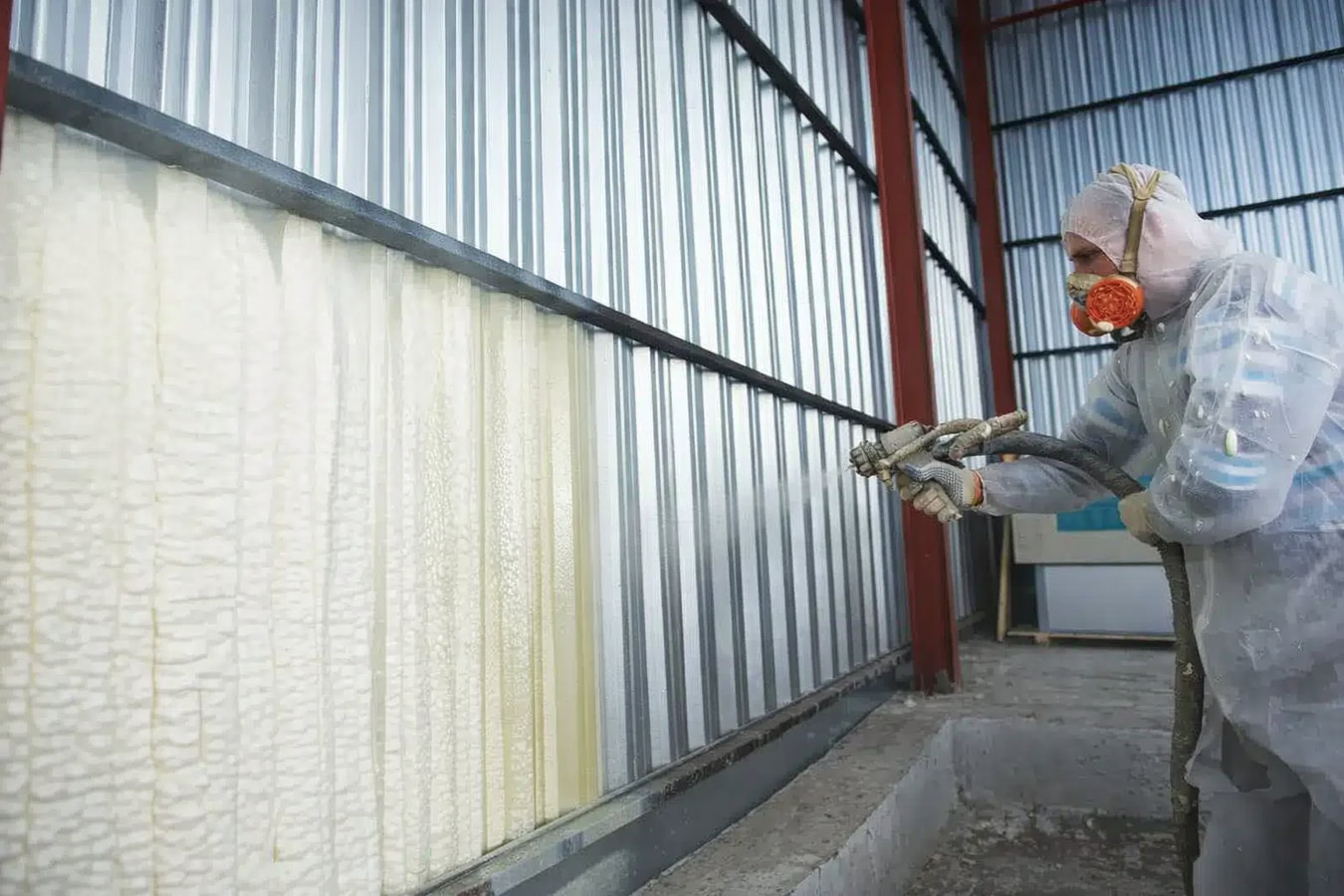
For commercial buildings that need both air sealing and insulation, spray foam is often the most efficient single-application solution, especially around rooftop equipment penetrations and rim joists. Blown-in loose fill suits large, open attic spaces above drop ceilings in retail and office buildings, where it can be added without requiring any demolition of the finished space below. Buildings with flat roofs or low-slope assemblies often benefit from rigid foam board installed continuously above the roof sheathing, which eliminates thermal bridging through structural members. We also offer wall insulation for exterior walls where cavities were skipped or have settled over the years.
Every commercial project we complete is documented with written records of what was installed, where, and to what depth or thickness before any walls or ceilings are closed. That documentation matters when you lease or sell the building, when a lender asks for building condition information, or when a future tenant wants to know what they are renting. Contractors who skip this step leave you without a record you may need years later.
The highest-priority upgrade for most Murrieta commercial buildings, where an under-insulated roof assembly lets extreme summer heat radiate directly into occupied space.
Covers rooftop HVAC penetrations, rim joists, and irregular cavities in one application, combining air sealing and thermal resistance where conventional materials cannot reach.
Cost-effective for large, open attic spaces above drop ceilings in retail and office buildings, added without disrupting the occupied areas below.
Used in continuous insulation applications on flat roofs, above roof sheathing, or at the building perimeter to eliminate thermal bridging through structural members.
Murrieta sits in the Inland Valley, where summer temperatures regularly reach the mid-to-upper 90s and the city gets little of the coastal marine layer cooling that affects San Diego. For commercial buildings, that means the roof and ceiling are absorbing intense solar radiation from June through September, and any building with thin or aging ceiling insulation is paying for that heat every month in electricity costs. Climate Zone 10 designation under California's energy code reflects this reality, and it is what sets the minimum bar for any permitted commercial insulation project in the city.
The commercial building stock in Murrieta grew quickly during the 1990s and 2000s alongside the residential boom, and many of those strip centers, office parks, and light industrial buildings are now 20 or more years old. Insulation from that era was often installed to the minimum standard required at the time, which is significantly lower than what modern materials and current California requirements specify. A building that is losing money every summer on cooling costs because of aging or minimal insulation is a straightforward problem with a documented solution.
Business owners in Temecula and Moreno Valley face the same combination of Inland Valley heat and aging commercial stock that makes insulation upgrades a sensible investment. We serve all of Southwest Riverside County and handle permit applications through each city's building department, so the process is the same regardless of which side of the Murrieta city limits your building sits on.
We respond within 1 business day. Initial questions cover building size, type of space, and what is prompting the call. No honest contractor can give you an accurate price without seeing the building first, so the next step is always a site visit.
We walk the building with you, inspect the attic or ceiling space, note existing insulation conditions, and identify air leaks. You receive a written estimate that breaks down what is being done and why, not a single number with no explanation.
For most commercial projects in Murrieta, we apply for the required permit through the City of Murrieta Building and Safety Division before work begins. Permit timelines vary by project scope; we factor this into the overall schedule and keep you updated.
Standard commercial jobs take one to three days for a typical Murrieta space. The crew checks in at the start and end of each day to report on progress. After the work is complete, a walkthrough confirms coverage before any ceilings or walls are closed up.
Free on-site assessment. No obligation. We respond within 1 business day.
(951) 574-0182Every commercial project starts with a free written proposal that lays out the scope, materials, and price before you commit. You get a clear document to review and compare, with no obligation to move forward.
Murrieta falls in California Climate Zone 10, which has specific minimum insulation requirements for commercial buildings. We install to those standards on every permitted project and handle the inspection so you are not managing code compliance yourself.
We work across Murrieta, Temecula, Menifee, Moreno Valley, and eight other nearby cities. Our crews know the commercial building stock across the region, including the common construction methods of the 1990s-era strip malls and office parks.
We walk every commercial job before any insulation is covered up, so you can see the coverage with your own eyes. We leave you with written documentation of what was installed, including material type and location, which is valuable for future leasing, sales, or insurance purposes.
Commercial insulation projects involve permits, inspections, and documentation that protect both the property owner and the occupants long after the crew leaves. A contractor who pulls permits when required, shows the work before walls close, and leaves you with written records is one who takes that responsibility seriously. NAIMA publishes the installation standards that define what quality commercial insulation work looks like, and we work to those standards on every project in Murrieta and the surrounding region.
Open-cell and closed-cell spray foam for commercial roof decks, wall assemblies, and irregular cavities where air sealing and insulation need to happen at the same time.
Learn moreDense-pack and batt wall insulation for Murrieta commercial buildings where exterior wall cavities are under-insulated or were skipped entirely during original construction.
Learn moreLock in your site assessment before Murrieta's peak cooling season fills our schedule. Written estimates, no obligation.